

Every cosmetic label is packed with information — when the product was made, how long it lasts once opened, what's inside and how to use it safely. Once you know how to read it, you can avoid expired products, spot suspicious ones and choose formulas that suit your skin. Here is what each part means.
1. Expiry Date and Manufacturing Date
Many products print an expiry date, often after EXP, and sometimes a manufacturing date after MFG or MFD. Dates may be written day/month/year or month/year, and some brands from East Asia print year first (for example 2026.08.15).
The expiry date applies to an unopened product stored properly. Once you open it, the clock that matters is usually the period after opening.
2. The PAO Symbol (Period After Opening)
The small open-jar icon with a number and "M" — such as 6M, 12M or 24M — tells you how many months the product stays at its best after you first open it. A cream marked 12M should be used within 12 months of opening, even if the printed expiry date is later.
Tip: write the opening date on the pack with a marker so you don't have to guess.
3. The Hourglass Symbol
An hourglass icon followed by a date means "best before end of". It is often used on products with a shorter overall life. Use the product before that date.
4. Batch or Lot Code
The batch code is a short string of letters and numbers — printed on the bottom of a bottle, the crimp of a tube or the side of a box. It lets the manufacturer trace exactly when and where a product was made, which matters if there is ever a recall. On genuine products the code on the item usually matches the one on the box. Free sites such as CheckFresh and CheckCosmetic can decode many brands' batch codes. A missing or mismatched code is one of the signs we cover in how to spot fake cosmetics.
5. The Ingredient List (INCI)
Ingredients are listed using standardised international names called INCI. Two rules make the list much easier to read:
- Ingredients are listed from highest to lowest concentration, at least down to around 1%. The first five or so make up most of the product.
- Ingredients under about 1% can be listed in any order — so an "active" listed near the end is probably present in a small amount.
Some useful names to recognise:
- Aqua — water, usually first in creams and serums
- Glycerin, Sodium Hyaluronate — hydrating humectants
- Ceramide NP / AP / EOP — barrier-supporting lipids
- Niacinamide, Ascorbic Acid, Salicylic Acid, Retinol — common actives (see our serum guide)
- Parfum / Fragrance — a blend of scent ingredients; worth avoiding if you have sensitive skin
- Alcohol Denat. — a quick-drying alcohol that can feel drying for some skin types (fatty alcohols such as cetyl or cetearyl alcohol are different and are moisturising)
6. Sunscreen Labels
Sunscreens carry their own important information:
- SPF — protection against UVB, the rays that cause sunburn. SPF 30 or higher is recommended for daily use.
- PA+ to PA++++ — protection against UVA, the rays linked to tanning and skin ageing (common on Korean and Japanese sunscreens). More plus signs mean more UVA protection.
- Broad spectrum — protects against both UVA and UVB.
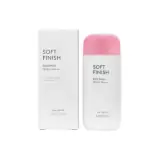
Never use sunscreen past its expiry date — the UV filters can lose effectiveness. Browse our sunscreens, such as Missha Aqua Sunscreen SPF50+ PA++++.
7. Marketing Claims
Words like "dermatologically tested", "non-comedogenic", "natural" and "hypoallergenic" are common but are not tightly defined everywhere. They can be helpful hints, but the ingredient list and your own patch test tell you more.
A General Guide to Shelf Life After Opening
Always follow the PAO symbol on your product. As a rough guide when there isn't one:
- Mascara and liquid eyeliner: about 3 months — eye products carry the highest infection risk (see mascara)
- Liquid foundation and concealer: about 6–12 months
- Lipstick and lip balm: about 12–24 months
- Powders (blush, eyeshadow, setting powder): about 24 months
- Skincare creams and serums: usually 6–12 months — vitamin C serums often sooner
Throw away any product that changes colour, smell or texture, separates, or grows mould — whatever the date says.
Storage Matters in Bangladesh
Heat, humidity and sunlight shorten a product's life. Keep cosmetics in a cool, dry place away from windows, close lids tightly, and avoid leaving products in a hot car or a steamy bathroom shelf for long periods.
Buy With Confidence
At RuSu, you can message us before ordering to ask for a product's expiry date or batch code, and expired items are covered by our return policy. Explore our skin care range to find products with clear, complete labels.
Frequently Asked Questions
Is it dangerous to use expired cosmetics?
Expired products may not work as well and can grow bacteria, which can cause irritation or infections — especially around the eyes. It's best not to use them.
What does 12M mean on a cream?
It means the cream should be used within 12 months of first opening it.
Why are some ingredients listed in Latin?
INCI names use Latin or scientific names for plant extracts and some ingredients so that labels are consistent internationally — for example "Aloe Barbadensis Leaf Juice" for aloe vera.